
Why Where You Learn Matters as Much as What You Learn: The Case for Training in the Jungle
Jul 07, 2026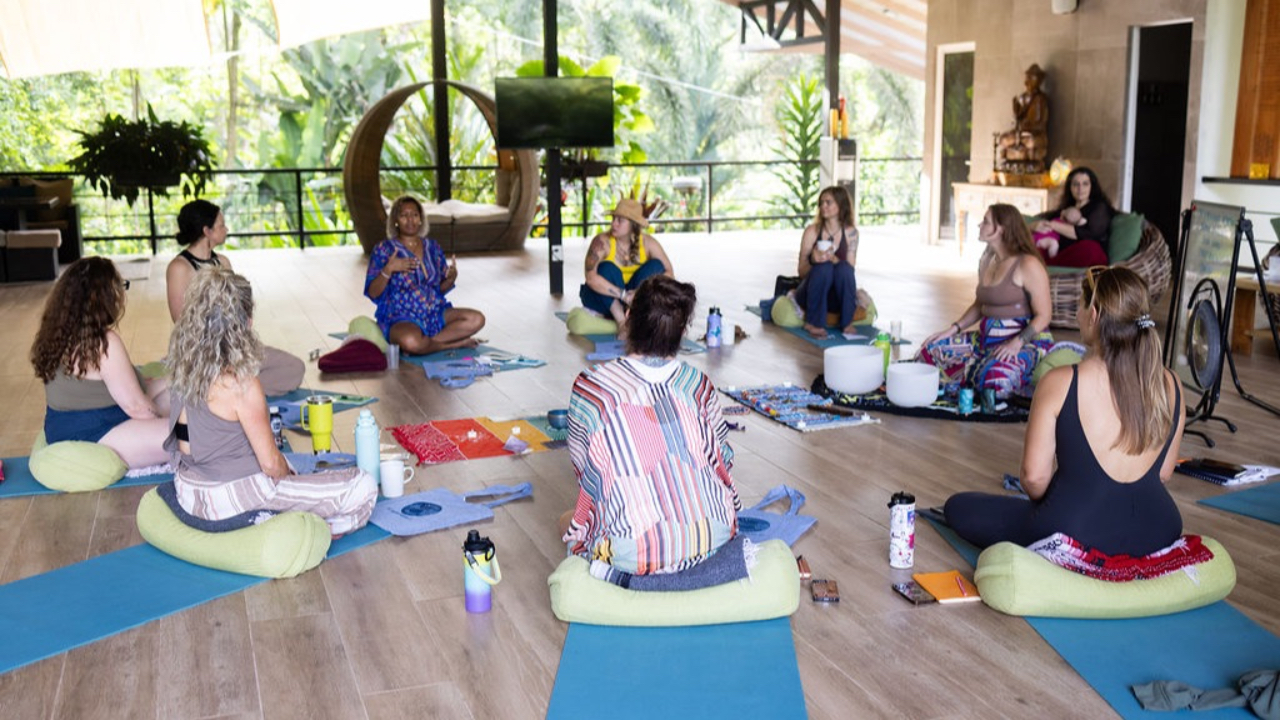
Why TEW trains in the Costa Rica jungle — and what the neuroscience says about environment, learning, and what seven days in immersion does to a practitioner's nervous system.
There is a version of professional development that happens in a conference room.
Fluorescent lighting. Folding chairs. A projector screen. Coffee that was made three hours ago. You take notes, you absorb information, you leave with a folder of materials and a certificate with your name on it — and then you drive home, walk through your front door, and step directly back into your life. Your clients, your laundry, your inbox, the version of yourself that existed before you left that morning.
Nothing about the environment asked anything different of you. So nothing different was possible.
I have spent years thinking about this. About why certain learning experiences change something lasting in a practitioner and others don't. About what separates the training someone describes ten years later as the thing that changed everything from the one they can barely remember attending. And what I keep coming back to — every time, grounded in the neuroscience of how the brain actually encodes new learning — is this:
Environment is not ambiance. It is input.
What the Nervous System Does With Context
Your nervous system is exquisitely sensitive to place.
The studio you teach in, the commute you take to get there, the sounds and smells and visual cues of your ordinary life — all of it becomes part of the neural pattern your brain associates with who you are in that context. You arrive at your practice already patterned. Already in your role. Already running the program that this environment has taught you to run.
This is not a flaw. It is a feature. The brain conserves energy by building contextual associations — triggering habitual responses based on familiar cues so you don't have to consciously decide how to behave in every moment. It is one of the most elegant things the nervous system does.
And it is precisely why trying to make a deep shift in your practice while remaining inside your ordinary context is so difficult. You are asking for new responses in the same environment that keeps cueing the old ones. The room itself is working against you.
Remove the context entirely — genuinely, for a sustained period, in a place that shares nothing with your ordinary life — and something different becomes possible. The nervous system stops running its familiar program because nothing around it is cueing that program. It becomes, for the first time in a long time, genuinely available to receive something new.
This is not a metaphor. This is neurobiology. And it is the primary reason TEW runs its flagship Sound Practitioner Training in the jungles of Uvita, Costa Rica.
Why the Osa Peninsula Specifically
TEW has been running international retreats and trainings since 2017 — across Costa Rica, Nicaragua, Mexico, and the United States. The decision to root the certification program specifically in Uvita, on the edge of the Osa Peninsula, was not logistical. It was intentional.
The Osa Peninsula is one of the most biologically diverse places on the planet. The rainforest there is not decorative. It is alive in a way that registers in the body before the mind has caught up to it. The density of the canopy. The sound of howler monkeys at dawn that startles you awake into something more alert and more present than your alarm clock ever managed. The quality of the air after rain. The way the light comes through the trees at a particular angle in the late afternoon and makes everything feel, briefly, like it is exactly as it should be.
Your nervous system responds to all of this. Researchers studying time in natural environments have documented measurable reductions in cortisol, improvements in attention and working memory, and shifts in autonomic nervous system tone after sustained exposure to natural settings — particularly biodiverse, remote ones. The body registers safety differently when it is surrounded by aliveness rather than concrete and artificial light.
And Synergy Retreat Center sits inside all of this deliberately. Open-air shalas where the jungle is not outside the window but part of the room. The sound of the river running underneath the evening sessions. Meals shared around a long table as the sun drops behind the canopy. Integration time that is not scheduled but simply available — because there is nowhere else to be and nothing else pulling at your attention.
Seven Days. Here's What Actually Happens.
I want to take you through it. Not as a schedule — as an experience.
You arrive on day one carrying everything. Your client list. Your studio drama. The mental load of every role you hold at home and at work. You can feel it in your shoulders before you even unpack. Most practitioners spend the first evening just exhaling — looking around at the jungle, at the people who have shown up alongside them, and feeling the first loosening of something they didn't even realize they were gripping.
Day two, something starts to shift. You sleep differently in the jungle. Deeper. Stranger. The sounds that woke you the first night become the sounds that settle you the second. You wake before your alarm and lie there listening to the birds and realize — with a kind of quiet shock — that you don't have anywhere to be for the first time in longer than you can remember. Nobody needs you for the next hour. You let that land.
By day three, you are starting to arrive. Really arrive. The practitioner brain that was still processing everything you left behind has finally quieted enough for you to be present in the room. And what happens in the shala on day three is different from what happened on day one — not because the content changed, but because you changed. You are more open. More available. The things being taught are landing in your body instead of just your notes.
Day four is often the one people cry on. Not because anything is wrong — because something is right, for the first time in a while. The nervous system science you've been learning starts to become personal. You realize you have been running on dysregulation for so long that you forgot what it felt like to be in your own body. You are in it now. Fully. And the feeling is so unfamiliar it moves through you like grief and relief at the same time.
Days five and six are where the real work happens. Where the integration sets in. Where you pick up an instrument and something in the way you hold it has changed. You're not performing a technique. You're transmitting something. Your cohort feels it. You can see it on their faces when you practice on each other — the way they settle under your hands, the way the room changes when you walk into it. You are becoming something different. Not a different person. A more fully realized version of the one you already were.
Day seven, you pack your bag in the morning and sit with the weight of what you're carrying home. Not the weight of everything you arrived with — that's long gone. Something else. A clarity. A settledness. A knowledge, in the body, of what you are actually capable of and who you are when nobody needs anything from you and the jungle has had a week to remind you.
You hug people who were strangers seven days ago like you've known them for years. Because in the ways that matter, you have.
And then you go home. And you walk back into your practice. And something in the room feels different — not because anything about the room changed, but because you did.
What It Means to Sleep, Wake, and Learn in the Same Place
The neuroscience of learning has a name for what I just described: consolidation.
The brain consolidates new learning during rest — particularly during sleep — and it does so more effectively when the learning environment and the resting environment are continuous. When you go home every night, you disrupt that process. The neural pathways you started building during the day get crowded out by the demands of your ordinary life before they have had time to stabilize.
In Uvita, there is no going home. You sleep where you learned. You wake where you integrated. You eat breakfast with the people you are becoming alongside. And the next morning, you walk back into the shala and the nervous system that arrives has been quietly doing the work all night, in the same environment, without interruption.
This is what seven days in the jungle can do that a weekly or monthly format cannot replicate — not because one is better than the other, but because they are doing fundamentally different things. The local training gives you consistency, gradual integration, and the ability to bring what you're learning directly into your existing practice week by week. The immersive format removes you from that context entirely so your nervous system can receive something at a depth that incremental exposure simply cannot access in the same way. Both are powerful. Both are intentional. They just ask different things of you — and give different things back.
Location Is Curriculum
I say this plainly when I talk about why TEW chose Synergy, and I mean it without poetry: the jungle is not the backdrop for this training. It is part of the training.
The remoteness is curriculum. The removal from ordinary roles and demands is curriculum. The shared meals and late-night conversations and waterfall walks and morning practices in open-air space are curriculum. The howler monkeys at 5am that make you laugh out loud in the dark are, arguably, curriculum.
Every element of the environment was chosen because it creates the conditions for the kind of learning that changes something lasting in a practitioner. Not the kind that fills a notebook. The kind that changes how you walk into a room.
TEW has spent nearly a decade running trainings internationally, refining what works and why. The Costa Rica container is what it is because of everything we learned in every place we taught before it. It is not an accident. It is the result of years of understanding what a practitioner's nervous system actually needs to make a shift that sticks.
The Last Time
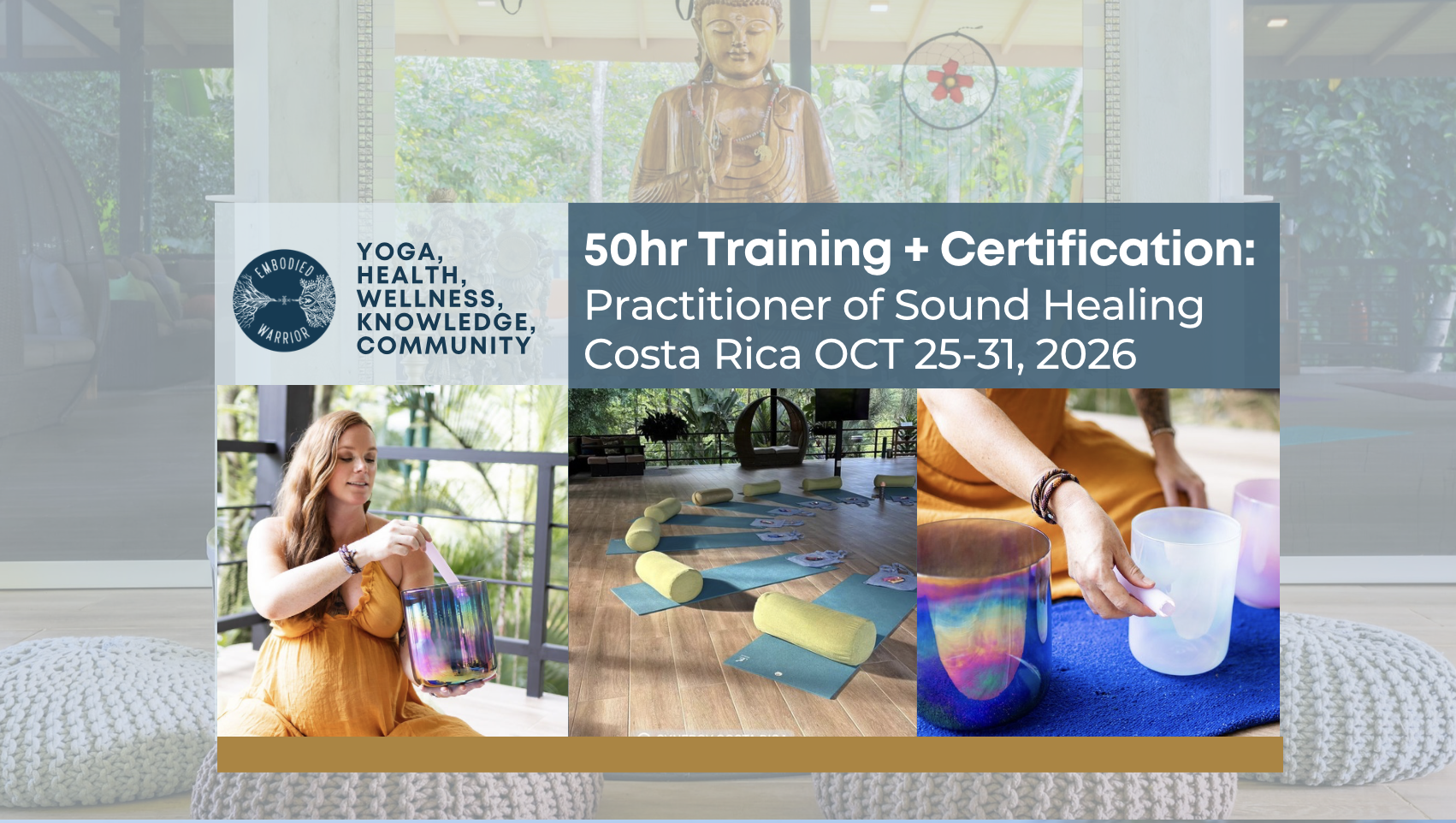
October 25–31, 2026 is the final 50-Hour Sound Practitioner Training at Synergy Retreat Center in Uvita.
This chapter is closing with intention — not because it stopped working, but because what comes next is already beginning to grow. And this particular container, in this particular place, deserves to close the way it has always run: with the right people in the room, doing the work that only the jungle seems to know how to hold.
Six spots remain.
The jungle is waiting.
[Details and registration →]
SUBSCRIBE FOR WEEKLY LIFE LESSONS
We hate SPAM. We will never sell your information, for any reason.
