
When You're Good at What You Do But Something Is Still Missing: A Letter to the Practitioner at the Ceiling
Jun 03, 2026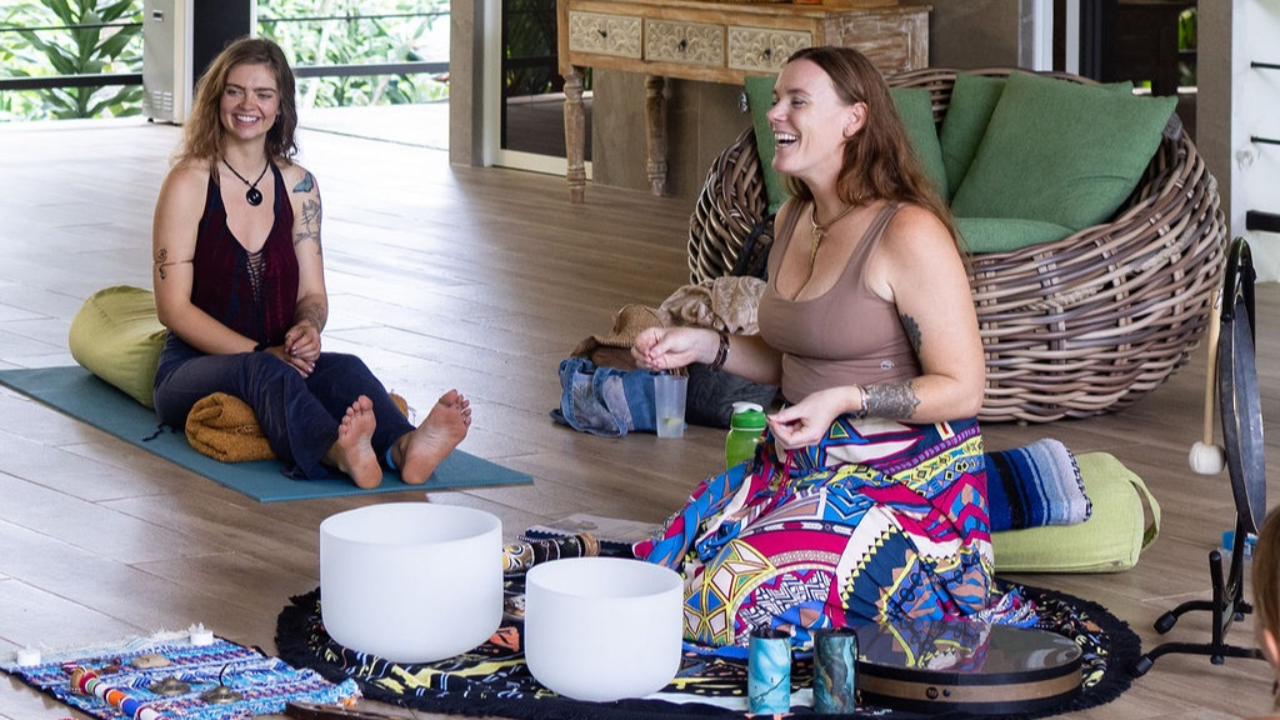
Experienced yoga teacher or LMT hitting a plateau? Not burned out — something quieter. Read this if your work is good but has stopped deepening.
You didn't get here by accident.
You put in the years. The trainings, the continuing education, the long days building a practice from nothing. You have clients who trust you. Some of them have been coming to you for years. You know what you're doing inside a session — the rhythm of it, how to read the room, when to offer more and when to simply hold the space.
By most measures, you're exactly where you set out to be.
And yet.
There's something you haven't said out loud to many people. Maybe not to anyone. It's not burnout — you know what that feels like and this isn't it. You still love this work. You still believe in it. But somewhere in the last year or two, something quietly shifted. The sessions are technically solid. Your clients leave satisfied. The work is good.
It's just not deepening.
What the Ceiling Actually Feels Like
It's subtle enough that you can rationalize it. Blame it on a busy season, a difficult stretch of clients, the general weight of the world. You tell yourself everyone goes through phases like this.
But here's what it actually looks like from the inside:
You're in the middle of a session and you're doing everything right — the sequencing, the cues, the hands, the presence — and somewhere underneath the competence you notice a flatness. Not boredom exactly. More like going through motions that used to feel alive and now feel practiced. Correct. Hollow in a way you can't quite name.
Your clients come back. That's the thing that makes this confusing. The work is working, by every external measure. But you can feel the difference between a session where something genuinely moved and a session that was just... fine. And fine is happening more than it used to.
There are clients you've been seeing for two years who are better, but not transformed. You can feel the edge of what you're able to offer them, and you're bumping against it. Not because you're not skilled enough. Because you've reached the limit of your current toolkit.
And maybe the most disorienting part: you're not sure what the next thing is. You've done the trainings. You've accumulated the hours. You know your modality deeply. What you're sensing isn't a gap in knowledge. It's something harder to name.
It's a gap in depth.
This Isn't a Crisis. It's Information.
I want to be careful here, because the wellness industry has a way of turning every moment of professional uncertainty into a problem to be solved with the next certification. That's not what I'm saying.
What I'm saying is that the ceiling you're sensing is real. And it's not a sign that something is wrong with you or your practice. It's actually a sign that you've developed far enough to feel what the next edge is. You can only sense a ceiling once you've gotten close to it. A beginner doesn't feel what you're feeling.
The practitioners who never notice this are the ones who stopped growing years ago and don't know it yet.
You're noticing. That matters.
What This Usually Points To
In eight years of teaching and training practitioners, I've watched this specific kind of plateau show up over and over. And it almost always points to the same thing: the work has become technical without remaining embodied.
That's not an insult. It's what happens naturally when we get skilled at something. We internalize the mechanics. We stop having to think about the steps. And somewhere in that automation, the felt sense of the work — the thing that made it alive in the beginning — quietly recedes.
The sessions are technically correct. But the practitioner isn't fully in the room anymore. And the clients can feel that, even if they can't name it.
What deepens a practice at this stage isn't more technique. It's not another modality stacked on top of the ones you already have. What deepens it is going back into the body. Back into the nervous system. Back into the quality of presence that made this work feel like something in the first place — and understanding, at a physiological level, what that presence actually is and how to cultivate it intentionally.
This is why I keep coming back to sound.
Not because it's a trend. Not because it adds a revenue stream (though it can). But because working with sound — really working with it, not just playing instruments in a room — requires a practitioner to get radically present in their own body before they can be of any use to someone else. It surfaces the flatness. It demands attunement that technique alone can't fake.
It has a way of making the work alive again.
A Letter, Not a Pitch
I'm writing this because I've been exactly where you are. Years into a practice I genuinely loved, technically proficient, respected by my students — and quietly aware that something had stopped moving. I spent a long time thinking I just needed to push through it, or rest through it, or wait for the feeling to come back on its own.
It didn't come back on its own. It came back when I found something that asked more of me than I was currently giving. When I had to become a student again, genuinely, and let that humility back into the room.
That's what I'm building in October.
The practitioners who come to my 50-Hour Sound Practitioner Training at Synergy Retreat Center in Uvita, Costa Rica this October are not beginners. They are experienced, established, and good at what they do. Many of them come in knowing this exact feeling — the ceiling, the flatness, the private awareness that something isn't moving the way it used to.
They leave knowing what to do with it.
Not because I hand them a new technique to layer onto their existing work. But because seven days of immersive training in a container designed specifically for practitioners at this level does something that a weekend workshop or an online course can't approximate: it returns them to themselves. To the felt sense of their own practice. To a quality of presence that technique alone was never going to recover.
If you're reading this and something in you is quietly saying yes — that recognition is worth paying attention to.
The ceiling you're sensing is the beginning of the next thing. Not the end of this one.
October 25–31, 2026. Uvita, Costa Rica. Seven spots remaining.
[Details and registration →] HERE
SUBSCRIBE FOR WEEKLY LIFE LESSONS
We hate SPAM. We will never sell your information, for any reason.
